
 Are you just starting to sew and still feel a little lost when it comes to fabric markers? There are several different types, and each has its own features, advantages, and disadvantages.
In this post, we'll focus mainly on the ones we carry in our store, because they're the ones we know well and trust. It's important that, before using any marker, whatever the type, you test a small area on the fabric you're going to sew and make sure it comes off without any problem. Obviously, if you're following one of the Lulu Ferris tutorials and marking one of our fabrics with the same markers we use, you already know there won't be any surprises. But if not, always test first.
To help you choose, here's a short summary of the fabric markers we use most often. These are the ones we can guarantee are top quality and work wonderfully. Tested ;)
Types of fabric markers.
1. Chalk-based fabric markers (disappear in the wash).
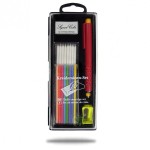 Mechanical pencils: Do you remember the mechanical pencils you used in school? These are the same, but instead of graphite leads, they use chalk. Mechanical pencils usually come in a pack containing several replacement leads. You can also buy the replacement leads separately, although with all the colors included in the pack, you'll have leads for a long time.There are thick-tip mechanical pencils and fine-tip mechanical pencils. Depending on the thickness you prefer for marking and on how well you can see, one or the other will work better for you. The thick-tip ones usually come with a sharpener so you can sharpen the lead if necessary. The good thing about fine tips is that they don't need sharpening, although they're more brittle. Don't press too hard!
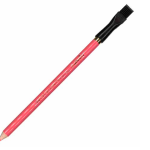 Pencil style: There's nothing complicated about them. They're chalk-based fabric markers, just like the mechanical pencils, but in pencil form. Sharpen them like a regular pencil, and you can find them in different colors. We carry them in pink and in blue. They work very well, are inexpensive, and have a small brush on top.
 Powder chalk markers: Also known as “roulette-style” markers because of their chalk-dispensing system. They're like markers that contain powder chalk and, instead of a tip, have a little wheel that releases it as we slide them across the fabric. Provide a very fine line and work wonderfully, although there are no replacement leads for these. You can buy them in packs of several colors or separately.
2. Fabric markers that disappear with ironing.
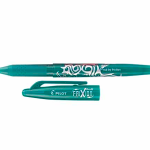 Pilot Frixion: Although they were designed as pens for writing on paper that could be erased by friction (they have an eraser at the top), they've become very popular in the sewing world because they also disappear with heat. In other words, when ironed. Specifically, you need to iron at about 65º for the ink to fade completely.
They have the peculiarity that the line reappears in cold temperatures (at approximately -15º), so if you absolutely need to recover the mark, you can always put the fabric in the freezer… We carry them in green and blue, and they're excellent, convenient, and super practical. You don't need to wash the garment afterward.
3. Fabric markers that disappear with water (without needing to wash).
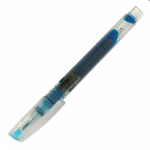 The ink is water-based, and what makes these markers special is that they disappear simply with water. Just remove the mark using a damp cloth or a spray bottle. It's important to remove the mark completely before washing or ironing and to test it before you start marking. You might have trouble removing it, especially on dyed fabrics.
There are more varieties of fabric markers, with different features from these: tailor's chalk, markers with “magic” ink that disappear in 48 hours, transfer markers (which require special paper), tracing wheels for marking patterns… However, the ones we've presented today are the ones that we find easiest to use and that give us the best results.
You already know you can find them all in our store and that it's always useful to have several types for different fabrics and projects.
We hope this post was helpful, and now, let's get marking!!!