
Many of you ask us about the different types of fabrics. Maybe you're new to sewing, or perhaps you've simply never learned much about the types of fabrics available, their origins, their composition, and so on.
So we're going to explain everything you need to know about fabrics, step by step, in several posts. Today we're starting with the first one, so let's get started!
Fabric
Fabrics are normally sold by the piece, with widths of 90cm, 120 cm, 150cm, 180cm, 280cm, 320cm….. and whatever length you want. 
Selvage: These are the two finished edges that define the width of a piece of fabric.
Warp : In a fabric, this is the set of threads running parallel or vertically to the selvages, also called the “fabric grain.”
Weft : These are the threads that cross the warp threads in a horizontal direction.
Fabric classification
You've probably heard or read the terms “woven fabric” or “knit fabric,” but how do we really tell them apart?

Woven fabric: We can say that woven fabrics are made with 2 systems of threads. One runs lengthwise (the warp) and the other crosswise (the weft). Both interlace to create a woven structure.
These fabrics are characterized by being rigid and stable when stretched vertically or horizontally. This characteristic gives the fabric body and firmness, so you'll need to consider whether these qualities suit the garment or project you want to make.
Woven fabrics are easier to cut and sew than knits because they generally retain their original shape without stretching or becoming distorted.
 Knit fabric: This type of fabric is normally made with a single system of threads (which can be the weft or the warp) that interlaces with itself, creating the fabric in loops. There are some exceptions in which two systems of threads are used, but that is not usual.
Another characteristic that usually distinguishes this fabric from woven fabric is that knits are normally stretchy or have some flexibility. That's why these fabrics are often used for comfortable or fitted garments that require ease of movement.
On the other hand, because they are flexible, they can be more difficult to cut and sew than woven fabrics.
Another thing to keep in mind when choosing fabric, which we often overlook or don't know about, is the origin of these fabrics, so we're also going to give you a few details about where they come from:
Origins of fabrics:
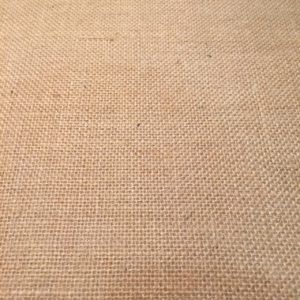 Plant fibers: These are natural fibers extracted from the plant kingdom in its most varied forms: seeds, stems, leaves, fruits, and roots, and processed in such a way as to obtain products for textile applications. When this type of fabric is burned, it burns with a luminous flame, leaving whitish ashes and giving off a characteristic smell of burned paper.
Some plant-based fabrics include: cotton, linen, hemp, bamboo, ramie, and jute.
Animal fibers: those that come either from hair follicles or from the glands of domestic animals, are extracted from the natural environment, and are processed into a product for textile applications.
Some animal-based fabrics that exist include: leather, silk, wool, alpaca hair, goat hair…
We avoid these types of fabrics because of the cruelty inflicted on animals. Today there are many alternatives of synthetic or plant-based origin.
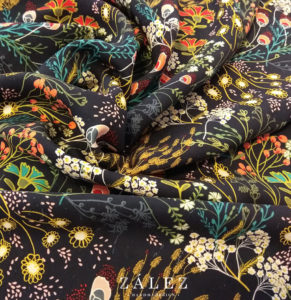 Cellulosic fibers: These fibers are created artificially from regenerated natural plant fibers. Through a chemical transformation process, the natural polymer is transformed into a series of continuous filaments. This type of process was developed with the idea of finding a fabric with characteristics similar to silk.
Today you can find: Viscose, Rayon, Modal, Cupro, Lenpur, Lyocell…

Synthetic fibers: born from industry and chemical research. They are continuous thermoplastic filaments with high molecular weight, produced by the petrochemical industry. Unlike cellulosic fibers, they are not obtained from a natural product; instead, they are created from scratch through a chemical process.
The main ones we can find are: polyester, polyamide, acrylic, elastane…
And that's all we'll cover about fabrics today. Has this information been useful?
We're leaving you with a downloadable PDF so you can start filing everything away and become a real fabric professional!
Have a wonderful day and happy sewing!
Lulú
*Fabric diagram by Romina Matire