
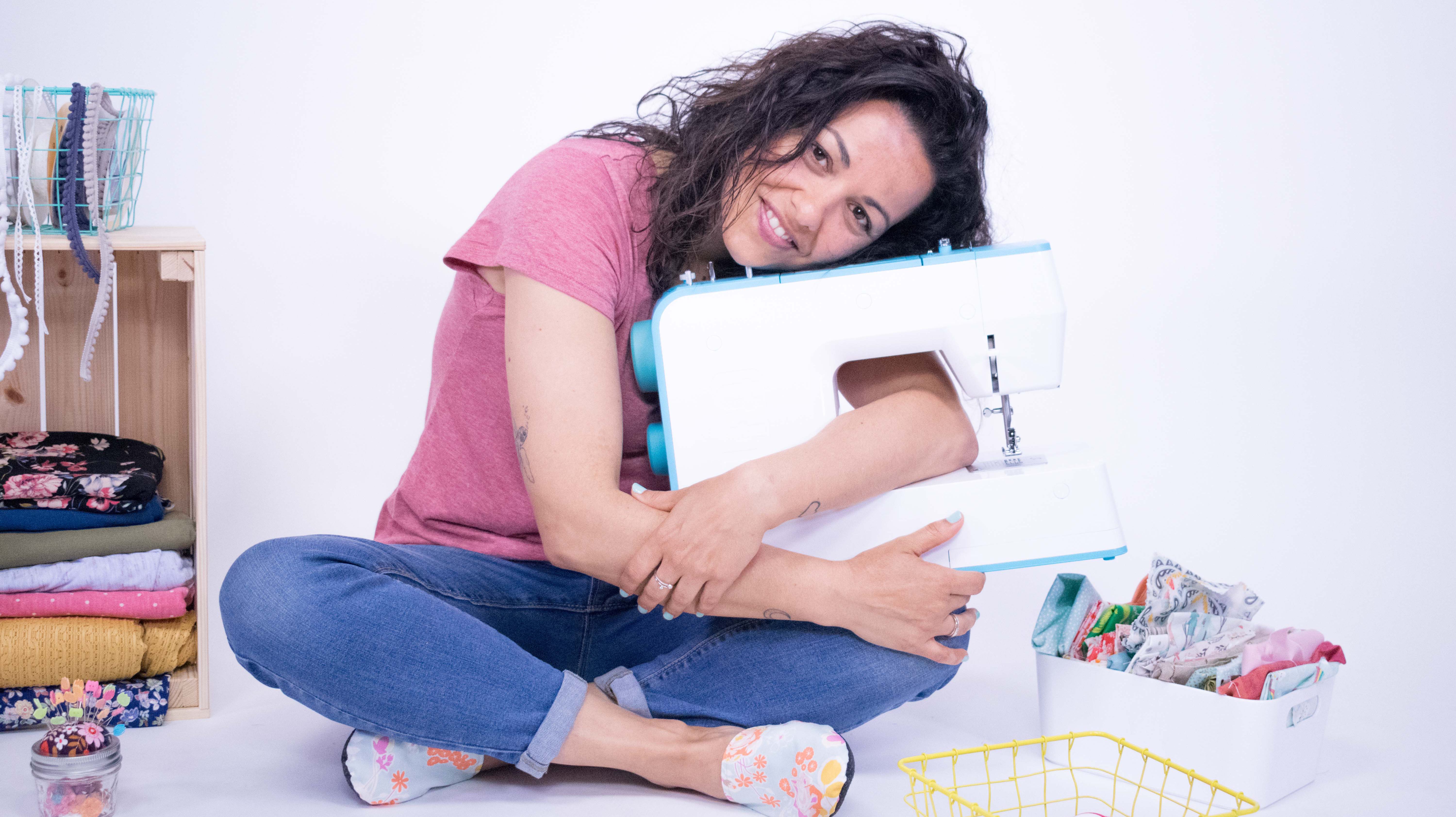

I often receive messages from people saying that their machine either doesn’t sew or isn’t sewing properly, that they don’t know what’s wrong and are wondering if I can help.
Most of the time, it will be one of the things I’m going to tell you about below, buuut there are some cases where something is actually wrong with the machine’s mechanics and you’ll need to take it to a repair shop.
Well, let’s start with the basics..
My machine isn’t working!
Is your machine plugged in? It sounds silly, but sometimes we’re so eager to sew that we end up pressing the foot pedal without even plugging in the machine…. haha

What about the power button? Yes, another obvious thing that sometimes slips our minds in our eagerness to sew.
Watch the bobbin winder! Because of being transported, getting bumped, a child playing with it, or simple forgetfulness, the bobbin-winding mechanism may have moved, leaving it in that position. That’s why you press the foot pedal and it makes a noise but doesn’t sew.
Help! It isn’t sewing properly! What do I do?
Re-thread it —both the upper thread and the bobbin. Often, a bit of lint we can’t see gets stuck between the tension discs and makes everything go wrong. Removing and replacing the thread removes it.
Clean the lint out of the machine and give it a thorough once-over. Run the brush through the bobbin case and a scrap of fabric through the upper-thread discs with the tension set to 0. A thread or bit of lint may have gotten stuck there and be having trouble getting out.
It’s skipping stitches and/or breaking the thread :(
Make sure the needle is inserted correctly. You may not have put the new one in properly. Check that it’s pushed all the way up until it touches the stop.

Change the needle. It may need replacing because it’s worn, bent, or blunt. It may have only been 10 minutes, but it can happen. You pulled on the fabric, the fabric is very thick, or it got nicked by the iron. A thousand different things.
Each fabric needs its own needle. Make sure you’ve chosen the right needle for the fabric you’re using: universal, ballpoint, denim, microtex… In this post about needles: a beginner’s guide, we tell you a few things about them.
The right thickness. Just like the needle type, the thickness needs to be right too. For lightweight fabric, 70-80; for medium-weight fabric, 80-90; for heavier-weight fabric, 90-100…etc..

Thread is very important. The thread needs to be good quality to avoid problems; otherwise, it can knot and break easily. Also, if you’re using your grandmother’s thread, it may have dried out, which is why it breaks.
I’m getting knots!
Did you lower the presser foot? It’s happened to all of us, especially when we first started sewing. You’re so focused on everything—the foot pedal, the thread, this and that…—that you forget to lower the presser foot… and then you get a knot. This can also happen when you’re sewing very thick pieces that are already touching the presser foot, and you assume you lowered it.

How’s the tension? Make sure the tension on your machine is set correctly. Somehow, the dial may have moved and you may be on the wrong number. If you’ve just started, check your machine’s instructions for the recommended setting.
And speaking of tension, let’s go back to the first points: make sure there isn’t any lint. Re-thread it, clean it, and give your machine some love—it’ll thank you.
If you’ve just started sewing and don’t really know how the machine works, in Lulu Ferris we have an introduction to the sewing machine class divided into three lessons, where we teach you what each part is, how it works, how to clean it… etc.
I hope this post has been helpful. Leave me a comment telling me about your experience. Did it help you? Have any of these things happened to you?
Happy sewing!
