
How many times have you caught yourself completely hunched over the machine? How many times have you gotten up from your worktable with pain and stiffness in your back, neck, and shoulders? How many times have you ended up with a headache from straining your eyes? Today's post is IMPORTANT: we're going to give you some tips for machine sewing without hurting yourself.
If you sew often and spend quite a few hours at the machine, you know what we're talking about. The problem is that we don't usually pay much attention—if any—to our bodies, and it takes a toll. Did you know that you could even give yourself a herniated disk?
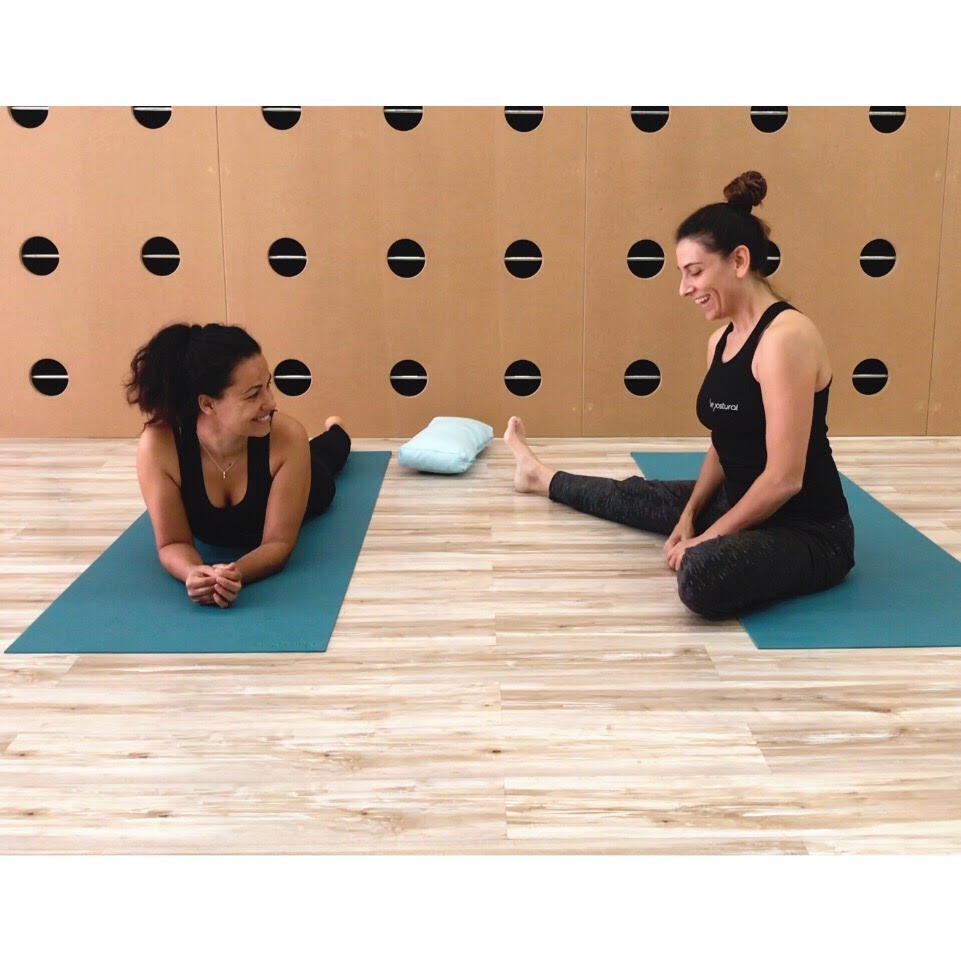
That's what Ana Belén, an expert in postural fitness, told us. She made us understand just how much we mistreat our bodies without realizing it. The good news is that it's easy to avoid these bad habits that can cause us so much trouble in the future. It all comes down to awareness.
Based on her wisdom and understanding of the body and injuries, we've prepared a short list. A summary of the things you need to become aware of to take care of your body and keep it healthy and in good condition for muuuchos years.
You can find a complete 35-minute video class full of good practices, exercises, and tips in the Lulu Ferris membership by following this link: Improve Your Posture for Machine Sewing.

1. Be Aware of Your Body
This is the most important one of all; it's vital. But what does it mean to be aware of your body? Simply knowing what you're doing with it at every moment. Feeling it, staying in control of it at all times, and noticing the positions you adopt.
It's very easy to lose awareness of your body when you concentrate on an activity like sewing. That's why, until you get used to maintaining the correct positions, you need to give yourself little reminders. Put up a sign or a sticky note, set an alarm to remind you to check your posture frequently, or ask someone to watch you and let you know when you're hunching…
Remember that you need to keep your back and neck straight so you don't end up like the Hunchback of Notre Dame. Keep your abdominal and lower-back muscles supporting your weight instead of putting it on the table.
2. Adjust Your Furniture
Fortunately, neither the furniture nor the machine is bolted to the floor or table. We shouldn't adapt to the furniture by adopting impossible positions; instead, we should arrange our work environment to make good posture easier.
For example: bring the machine closer to you, don't keep the foot pedal too far away, and consider getting a table that lets you adjust its height and angle, like the kind draftspeople use. And very important: choose a suitable seat.
Although it may seem strange, seats with backs are more enemy than ally in this task. As Ana Belén explains, a stool may be the smartest solution.
3. Do Exercises and Stretches
Don't be lazy about it: remember that we're talking about your health, your body—the place where you're going to spend the rest of your life. Before and after your sewing session, doing a few specific stretches and exercises will help you avoid a lot of aches and discomfort.
Yes, you can also find those exercises and stretches in the master class we mentioned earlier :)
4. Build in Breaks
Exercises aren't only good before and after. If your sewing session is going to be long, it's great to take breaks from time to time. And during those breaks, you can also add in a few stretches. You can also use some kind of time-counting system, such as setting an alarm on your phone or a kitchen timer.
Depending on your endurance, how delicate your back is, and how skilled you are at controlling your posture, choose your optimal work period between breaks. Every half hour, every forty minutes, every hour… Find the right limit for you.
5. Pay Attention to Lighting
Bad sewing habits don't only affect your back. Sewing in poor lighting will make us strain our eyes too much, which will probably give us a lovely headache as a gift.
Although sewing machines already include lighting over the needle area, sometimes we need an additional light source for the less well-lit areas. Natural light is best, but if we don't have it, remember that it's very easy to get an adjustable desk lamp. Use a cool-white light bulb, which will reduce headaches, or an LED lamp.
Follow these tips for sewing while staying aware of your body and your surroundings, and you'll see how you stop feeling battered and sore after sewing.
And remember, there's more and better information in the Lulu Ferris video tutorials!
Have a wonderful week!