

Today we're back with the second part of our series on fabric types, taking a closer look at fibers of plant origin, which come from the flower, stem, fruit, or any other part of a plant or tree.
COTTON: It is the world's most important source of cellulosic fibers and the most widely consumed because of its valued functional properties. Among all natural fibers, it stands out for how easily it can be worked and spun and for its magnificent properties.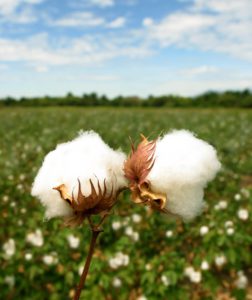
This fiber has several properties that make it so widely used: it absorbs moisture and releases body heat, takes dye well, does not generate static electricity, is insulating, and withstands high temperatures.
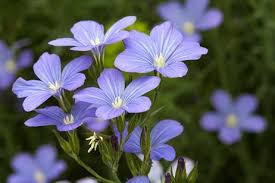
LINEN: After cotton fiber, it is the most widespread and commercially exploited. The fiber is extracted from the stem, which is formed by a polygonal inner tube or pith, externally surrounded by woody material.
It is a fabric that dries very quickly and regulates temperature. Although it is fairly stiff and not very elastic, it is stronger and more durable than cotton. Keep in mind that it wrinkles easily.
The manufacturing and cultivation process is expensive, so the fabric tends to have a high cost. Some textile industries blend linen fiber with other fibers, such as cotton or viscose, to reduce the cost.
BAMBOO: It is a natural, eco-friendly fiber that is soft, antibacterial, and repels ultraviolet rays; it is absorbent and comfortable—perfect for sensitive skin.
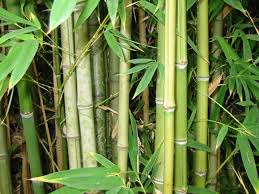
Other advantages of this fabric are that it is cool in summer and stays warm in winter.
It can be spun on its own or blended with cotton, silk, modal, and other regenerated cellulose fibers.
Bamboo is the fastest-growing plant in the world and is therefore an ecological and sustainable resource.
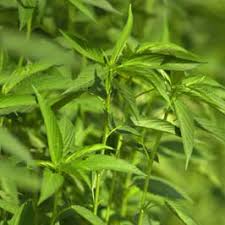
 HEMP: Hemp is the oldest fiber used by humans. Hemp harvesting and the process used to obtain its fiber are identical to those used for linen. Hemp fabric can be as soft and versatile as cotton, while being more durable, strong, and stable. Like bamboo fabric, its thermal properties make it cool in summer and warm in winter. It also has antibacterial properties.
 JUTE: Jute fiber yarns are used mainly to weave burlap for sacks, packaging, straps, and cordage, as well as mats, tapestries, and rugs.
But you've probably also seen it quite often in the world of sewing, since our beloved “sack fabric” is used to make curtains, clothing, costumes, fashion accessories, and so on… It can also be dyed or painted and is quite easy to handle, so sewing it isn't very laborious.
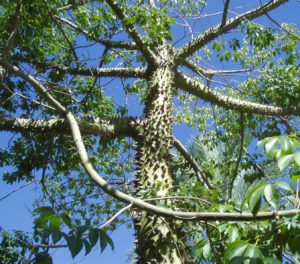 CEIBA: It is a tree whose fruit produces a fiber with textile applications. It is also known as “Kapok.” Its fibers are lightweight and strong, but they are not used for weaving; they are mainly used for insulation or as filling for cushions, mattresses, and so on.
We've attached the PDF on plant-based fabrics here, in case you'd like to print it and file it away together with the first part .
This is Part II, but not the end; we'll continue with the “volumes!” on fabrics.
And now, with a little more knowledge about fabrics… Happy sewing!