
Today we're back with the third part of this fascinating world of fabrics, and we're going to tell you a little more about cellulosic fibers.
These fibers are plant-based, although they're considered man-made because chemical processes are required to obtain them.
They were created with the intention of imitating silk, and years of research have led to many variations:
VISCOSE (also known as Rayon): This was created in 1884 and was known as "artificial silk." It is a regenerated fiber, meaning it is made from transformed natural substances. The raw material is eco-friendly, but transforming wood or bamboo pulp requires a chemical process.
Viscose has properties very similar to cotton. It doesn't pill, but it wrinkles easily. It also tends to shrink. It doesn't generate static electricity and usually has a very soft hand.

CUPRO: Cupro began to be marketed in 1918. It has a very silky hand and is also known as "Bemberg silk." It is normally used for linings or summer garments because it feels very pleasant and dries very quickly.
MODAL: It is made from wood pulp, usually beech. It is a flexible and soft fabric, more absorbent than cotton, and it does not shrink. It is widely used for homewear and lingerie. It is often blended with other fibers such as elastane or cotton.
LENPUR: This cellulosic fiber is very similar to viscose. It is made from the pulp of white Canadian pine. It is known as "vegetable cashmere" because of its softness and lightness.

LYOCELL: The best-known brand of this fiber is "Tencel." It is also made from eucalyptus wood pulp, but its production only requires a recyclable solvent and water, so it is considered the most eco-friendly fiber.
It is more stable than viscose, stronger than cotton, and does not shrink. It has a very soft, pleasant hand. It wrinkles very little and dries very quickly. It is a fabric with a lot of drape and fluidity, making it ideal for draped garments.
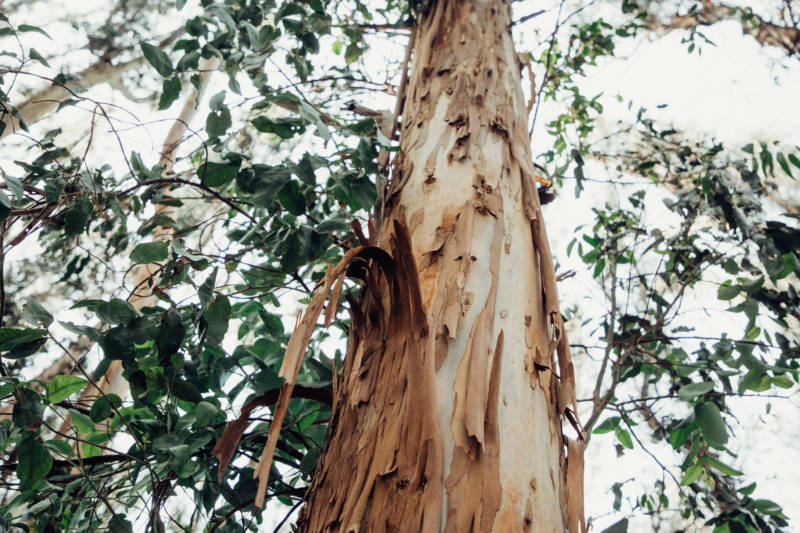
Eucalyptus
Interesting, right? Knowing about the varieties of fabrics that exist can be very useful when you're starting a project and don't know which fabric would best suit your idea or which fabric best aligns with your personal ethics.
Here we're leaving you the PDF in case you want to print it and keep it alongside Part 1: Weaves and Origins and Part 2: Plant-Based Fabrics
And with this third part finished (but not the last)… Happy sewing!